


Introduction
Let’s be honest — Artificial Intelligence (AI) is no longer something out of a sci-fi movie. It’s here, it’s real, and it’s changing how businesses run. For small and medium-sized enterprises (SMEs) in Europe, 2025 is going to be a big year.
New AI tools and trends are popping up everywhere. Some are exciting. Some are a bit overwhelming. Either way, management teams need to be ready to deal with both the chances AI offers and the challenges it brings.
In this blog, you’ll find out:
-
What AI trends are coming in 2025
-
The biggest hurdles for European SMEs
-
Simple, practical strategies management teams can use to stay ahead
Whether you’re running a business, managing a team, or just curious about how AI can work for you — this guide will help. And no worries, we’ll keep it clear, simple, and easy to follow.
The evolution of AI in the european SME landscape
AI didn’t become a big thing overnight. In fact, for a long time, it was a tool only huge companies with massive budgets could afford. But that’s changing fast.
Thanks to things like:
-
Cloud-based tools
-
Open-source AI software
-
AI-as-a-Service (AIaaS) platforms
SMEs across Europe are finally getting a piece of the action.
A recent 2024 report from the European Commission shows:
-
Around 35% of SMEs already use AI in some part of their business.
-
Industries like manufacturing, retail, and healthcare are leading the way.
What’s pushing this change?
-
Tougher competition
-
Higher customer expectations
-
Global supply chain headaches
AI is now one of the best tools SMEs can use to stay strong and grow. And governments are helping too, with EU programs and national AI strategies opening more doors.
That said, most SMEs are still just testing the waters. You’ll find AI in things like:
-
Customer service chatbots
-
Inventory tracking tools
-
Predictive analytics dashboards
But trust us — this is just the beginning.
Top AI trends shaping 2025
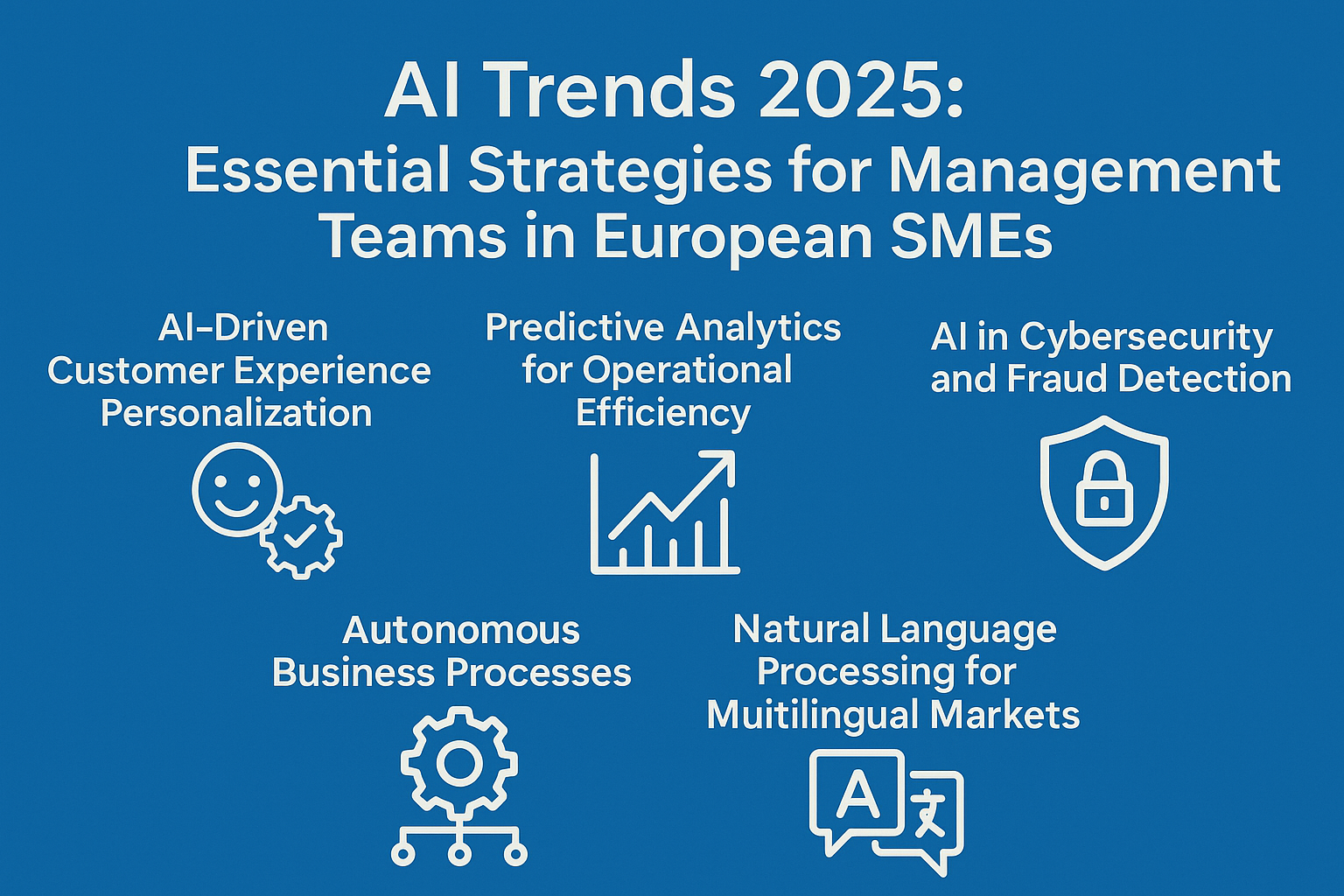
Ready for a peek into what’s coming next? Here are the five AI trends European SMEs need to watch closely in 2025:
1. AI-Powered customer personalization
Customers don’t want generic messages anymore. They expect offers, emails, and experiences tailored just for them. AI makes this possible by looking at what people buy, click, and search for.
With AI, SMEs can:
-
Suggest the right products
-
Send personal discounts
-
Create customized online experiences
It’s a simple way to turn occasional shoppers into loyal customers.
2. Predictive analytics for smoother operations
Imagine knowing exactly when to restock or which product will be a bestseller next month. AI-powered predictive analytics can help you do that.
It can:
-
Forecast inventory needs
-
Optimize delivery schedules
-
Predict machine breakdowns
All of this means fewer surprises and smarter decisions.
3. AI in cybersecurity and fraud prevention
Cyberattacks are getting sneakier, and many SMEs don’t have big IT teams to keep watch. AI security tools act like digital bodyguards — spotting weird activity and stopping problems before they grow.
AI helps by:
-
Detecting unusual behavior
-
Blocking suspicious transactions
-
Protecting sensitive customer data
A safer business is a smarter business.
4. Automating everyday business processes
AI isn’t just about robots and complicated data models. It’s also great at handling boring, repetitive tasks.
Think about:
-
Automatic invoice approvals
-
Smart HR tools
-
AI-driven customer service chatbots
Less manual work = more time for your team to focus on what really matters.
5. Natural language processing (NLP) for multilingual markets
Europe is full of languages, and that can get tricky. AI’s Natural Language Processing tools help by:
-
Translating content automatically
-
Offering multilingual chat support
-
Analyzing customer reviews in different languages
It’s a smart way to break down language barriers and grow into new markets.
Up next, we’ll tackle the common AI adoption challenges SMEs are dealing with — and how your management team can tackle them head-on.


Leave a Comment